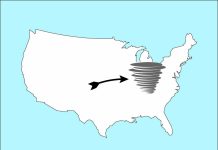


The United States’ invasion of Venezuela and conflict in Iran has polarized the nation. Republican voters feel betrayed, democratic voters are upset and the world waits in anxiety as ceasefire talks live in limbo.
Thomas L. Pearcy, associate history professor at Slippery Rock University, recently developed a commission of North American and Latin American students and professors. This commission is set to be working on providing access to federally-public documents to Panama, Cuba, Venezuela and other Latin American countries.
Pearcy, an expert in Latin American and American history, has spent several decades working around and for the United States government. Pearcy took the time to Zoom call with Rocket staff and provide insight into the ongoing situations in the United States.
“History Repeats Itself”
The United States has used the Maduro playbook before; in 1989, the Invasion of Panama draws shocking parallels to the 2026 intervention in Venezuela. Both Nicholas Maduro and Manuel Noreiga were ruthless dictators that had a love for death squads and civil rights violations.
“We went into Panama under the guise of capturing Noriega,” Pearcy said. “Geraldi [a past colleague] was contacted by officers in the canal zone, generals and admirals. This was October of ’89, and they said, ‘Hey, if you capture Noriego, hold him at gunpoint. We’ll send in a helicopter over, drop down and grab him’…They did it on October 4: captured Noriega, held him and contacted the canal zone and the pentagon. And it’s on camera! The American Blackhawk circled the comandancia where Noreiga’s office was, but then circled back to the canal zone.”
Pearcy explained how Venezuela is surrounded by poor, heavily-populated regions.
“Venezuela, much like Panama, has military bases surrounded by these shanty towns. They don’t build military infrastructure next to million-dollar townhouses,” Pearcy said. He elaborated on how these regions are especially affected during military engagement.
Pearcy expressed discontent with press gatekeepers’ coverage of Venezuela and Panama.
“Because of the nature of American press and politics, that’s all anyone will know. 99.9% of the population will believe we invaded Panama to get Noriega out and we didn’t kill any innocents in Venezuela,” he said.
Pearcy compares his firsthand experience on the ground for the Panamanian invasion to the intervention in Venezuela.
“I was walking 2 nights after the attack [on Panama] and I was, I just was stunned. It looked like Hiroshima; it smelled like burning flesh,” Pearcy said. “There were 40 square blocks, the size of SRU’s campus, just gone. It’s 11 o’clock at night and I’m just out doing what I do. This guy approached me and I thought, ‘I wouldn’t blame him if he killed [me].’ Looking around at all the devastation we caused, and he looked me in the eye and asked, ‘Why did you do this to us? We’re your friends.’”
“When Venezuela happened, I cried,” Pearcy confessed. “I know what happens, I’ve seen it. I’ve physically been there when Black Hawks open on civilian populations. We’ve killed thousands of people, and the American people will never know that.”
“Frequent Fliers”
Pearcy denounces President Trump and his foreign involvement, noting that the U.S. has become a “frequent flier’’ in Middle Eastern and Latin American politics.
Outside of the invasion of Panama, Pearcy connects Venezuela to other Latin American operations, especially in El Salvador.
“The assassination of Archbishop Romero in El Salvador? We were behind that,” Pearcy said. “People don’t know that the person who shot Romero is in the United States in witness protection living off our dollars.”
Pearcy critiques U.S.-Middle Eastern policies and draws shocking comparison between U.S. methods in Iraq and ICE’s (Immigration and Customs Enforcement) methods.
“Stephen Miller [past political advisor] is the architect of war,” Pearcy said. “He’s the architect of our Middle East engagements, and now the racist ICE raids that have been happening. My thinking on Iran and the Middle East is that it has become an easy target for someone throwing a tantrum.”
Pearcy points out that, like Panama, we already have done irreversible damage to Iran.
“We are not dropping smart bombs; we are trying to blow the hell out of everything,” he said.
Pearcy explains that while the Strait of Hormuz may be open, it won’t mean a drop in gas pricing. We have already done significant damage to key oil and gas infrastructure in Iran.
“The Trump Aggression”
Pearcy finds the common denominator between both Iran and Venezuela to be President Donald J. Trump.
“I think Trump’s aggression comes from his insecurities,” he said. “It shows he knows very little about world; he has no clue what he does not know. He’s very dangerous.”
Pearcy commends officials that have resigned from the Trump administration.
“There are some people right now doing some heroic things by resigning and refusing to be a part of it,” he said.
Dr. Pearcy ended his conversation with us with a recap of his stance on the Venezuelan invasion.
“What we did in Venezuela was completely and unequivocally unnecessary,” he said. “We had CIA operators on the ground, we had special forces on the ground in that area…we could anytime get into that palace and get this guy. That was not the point, and that’s my professional opinion…I have not seen the documentation, but I do know [that,] number one, we killed noncombatants and that number will never be known. Second, Venezuela has the largest oil reserve in the world, and we did what we did to get control of that oil.”