

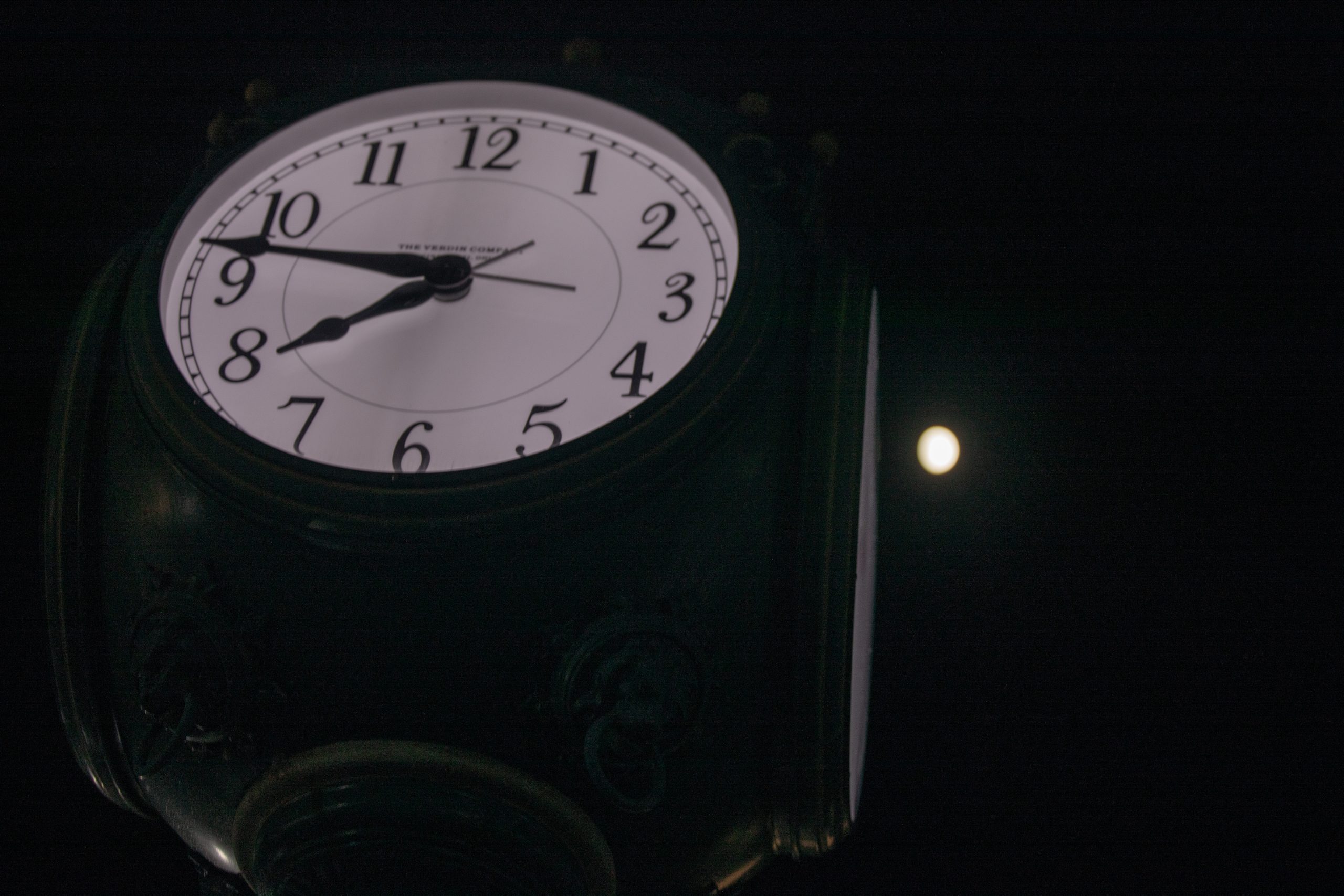
On Nov. 2, clocks “fall back,” ending the cycle of Daylight Saving Time that begins annually in March.
Daylight Saving Time is the practice of shifting clocks forward one hour in the spring. Then, in the fall, clocks are moved back to standard time.
The purpose of Daylight Saving Time is to make use of natural light and save energy. However, there is much debate over whether Daylight Saving Time is still necessary today, and the effects it takes on mental health and sleep.
The Rocket recently conducted a survey to see students’ opinions on Daylight Saving Time.
Some students said that Daylight Saving Time makes them feel tired and disturbs their sleep schedule.
“It messes with my sleep, and I just feel confused and tired for the next couple of days,” one student said.
“My beautiful REM sleep is ruined!” another student said.
Sleep is essential to maintaining good health. When people’s sleep schedules are disrupted, they may experience increased sleepiness and irritability.
“When I don’t get enough sleep, I’m tired and moody. I need to be in bed at 10 p.m. SHARP! For those 8 a.m.s I have every day,” one student said.
One SRU student noted that the early darkness affects how often people go out to do activities like shopping. “As someone who works in an outdoor outlet mall, I noticed that more people are willing to shop and be out in the evening if it’s light out rather than pitch black,” the student said.
Some students mentioned that Daylight Saving Time also affects their mental health.
“Daylight savings tends to give me seasonal depression. I hate it being pitch black out at 5. It makes me feel as though I’m wasting the day, and it’s going by quicker,” one student said.
“The difference in sun exposure probably has some effect on seasonal depression,” one student said.
The link between seasonal affective disorder (SAD) and Daylight Saving Time has been studied for years. Waning daylight can disrupt natural cycles in the body, such as the circadian rhythm and neurotransmitter activity.
This can lead to symptoms associated with depression, such as low motivation and productivity, as well as poor sleep.
However, some students say that they are not affected by the time change. “It just happens, and I move on,” one student said.
When asked whether Daylight Saving Time should be continued, 50% of students said it should be discontinued.
25% of students said to keep it, while 25% were not sure.
Students can improve their sleep by limiting screen time and caffeine before bed. They can also visit the Health Center for counseling services.