

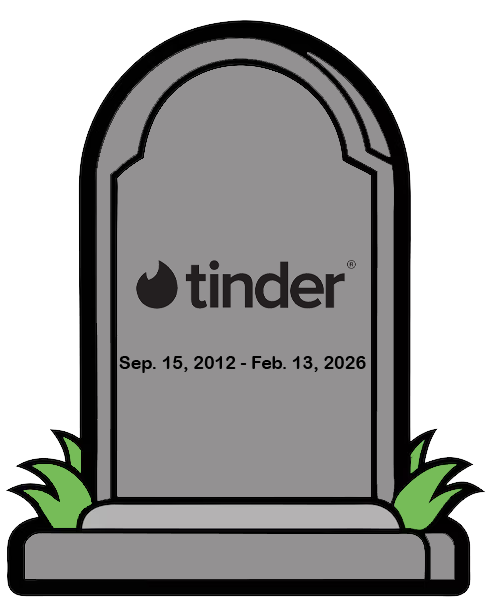

As of 2025, Tinder, one of the most widely-used dating apps, was also one of the most profitable apps, banking $1.22 billion in revenue.
Despite the profitability of Tinder, the Match Company, also owner of Hinge, Match.com and OkCupid, has seen a significant drop in their stock pricing since 2021.
According to Pew Research Group, over 50% of app users sit between the ages of 18-29, however, the overwhelming majority of Gen-Z individuals say they aren’t ready for a serious relationship.
Tinder and other dating apps are for-profit and subscription based. This means that, at the center of their business model, they want customers to continue using their product, something that is inherently contradictory of using a dating app. Consequently, Tinder and other dating apps seem to exist for casual hookups.
Despite the nature of these apps, 44% of users state that they are looking for a long-term partner. As a result, more young individuals are shifting to traditional dating as a more authentic alternative.
Emma Leichty, a senior communications and strategic media studies major, met her now-fiancé on Bumble.
“I think younger people use it to avoid the small talk…thinking it will be easier, but it ends up just being as much work,” Leichty said.
Leichty isn’t alone in her thinking, according to pew, only 44% of individuals found dating easier online. Dating apps often eliminate the process of relationship building and overwhelm the user with potential matches. In the same study, over 50% of women admitted to feeling overwhelmed by the amount of matches they received.
According to Pew, a large majority of women on dating sites have experienced being sent sexually explicit messages without consent, had someone continue to contact them after saying they were uninterested, been called an offensive name and/or threatened.
On average, men have more intent to meet for casual sex or casual dates than women. This type of environment fosters an unhealthy dynamic on the app, as it is unclear what an individual wants from the other person.
Aiden Trofimuk, a Slippery Rock University sophomore, called Tinder a “cesspool,” claiming it is only home to people looking for casual hookups.
Safety is an ever-present issue on these platforms. Nearly every individual surveyed recommends background checks on dating apps, and 49% stated that online dating is not a safe way to find a match. With that, more users are losing trust in dating apps’ algorithms, with only 21% of users surveyed believe the algorithm works.
When speaking to Slippery Rock University’s student body, the majority struggled with bringing matches into the real world.
“It’s a dating app: people talk online for months without ever meeting. How is that supposed to be a relationship?” Dante Wright, a Rocket contributor, said.
Additionally, multiple individuals admitted to using Tinder and other platforms for “trolling” or “swiping for fun.” These users may water down the pool for individuals looking for a serious relationship.