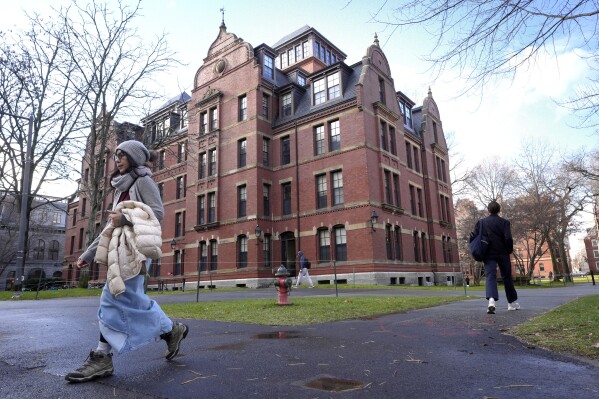
On April 15, the Trump administration announced it would be halting more than $2 billion in grants and $60 million in contracts to Harvard University after the University refused to comply with the administration’s demands, according to the Associated Press.
Earlier, the administration had demanded that the university change its policies regarding the ability of students to protest, demanding clearer policies about the location, time and manner of protests. This comes after Harvard and other Ivy League institutions are receiving pushback from their handling of the various protests against the Israel-Hamas War, in which the administration claims Harvard has “failed to protect American students and faculty from antisemitic violence and harassment”.
The administration has also demanded that Harvard University ban the use of face masks on its campus, which opponents of the decision argue is being done to prevent individuals from protesting unpopular opinions.
Following the halt in funding, Harvard University sued the administration over what they consider an unjust attack on the university, and a way for the federal government to have more control over higher education. Harvard is also claiming in the lawsuit that the administration cannot “identify any rational connection between antisemitism concerns and the medical, science, technological and other research it has frozen that aims to save American lives.” Harvard University conducts various medical studies on diseases such as A.L.S. and tuberculosis, which have been affected by the halt in funding.
While the case continued to be deliberated, a federal judge in New Hampshire issued a ruling regarding public schools on Thursday that may serve as a precedent for future rulings about the federal government’s role in education. According to The New York Times, Judge Landya B. McCafferty said that the administration could not withhold funding to certain public schools that have DEI initiatives. The judge ruled that since the administration could not properly define DEI and the policy would be an infringement on free speech.
Judge McCafferty also ruled that the administration has no legal authority to withhold public school funding under these grounds. As it stands, this decision only affects public schools that hire individuals who are part of either the National Education Association or the Center for Black Educator Development. The administration will likely appeal the ruling.
Will Slippery Rock University be Impacted?
While Slippery Rock University is a public university, it receives most of its funding through tuition and the state government. According to a statement released by the university, SRU’s largest funding sources are tuition and various fees, which make up 57% of funding, and appropriations from the state government, which make up 36% of the funding received. The remaining 7% is made up of various elements, including interest income and facility rentals.
While the federal government does not control funding to the university directly, many students are attending school with grants, student loans, and other financial assistance provided by the federal government.
“However, recent Federal funding cuts have not applied to direct student loans, Pell Grants, or other forms of Title IV financial assistance, including work study, that are distributed directly to individuals,” the university said in a statement.