

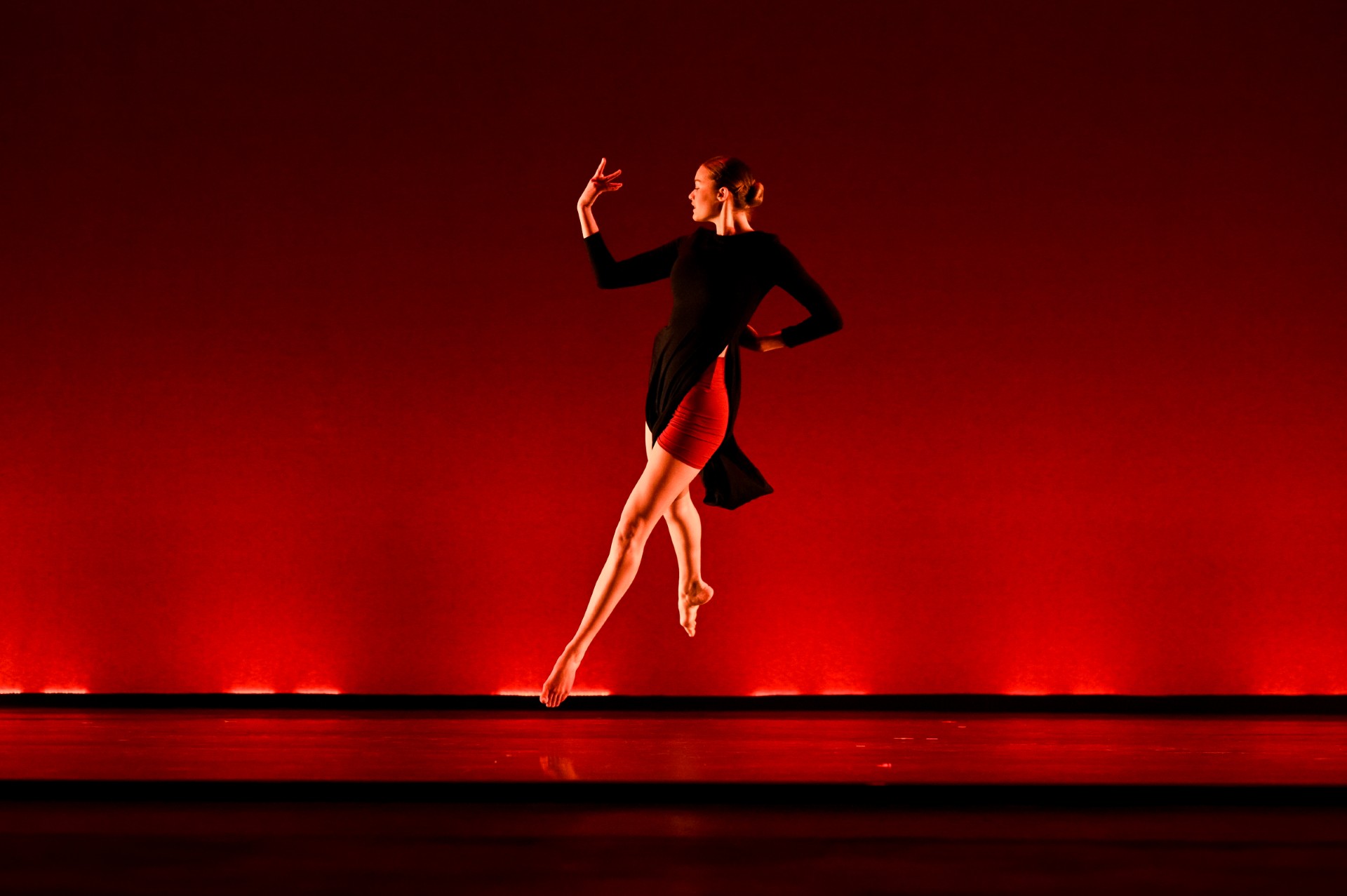
For some, dancing is a hobby or a way to stay active. For dance majors at Slippery Rock University, it is a daily commitment.
Abby Brubaker is a junior earning her Bachelor’s of Fine Arts in Dance.
Brubaker has been involved in dance since she was 4 years old. “I think once I found out that I could go to college for it, that was the only option,” Brubaker said.
Herrmann is a junior earning their Bachelor’s of Fine Arts in Dance, with a concentration in performance and choreography.
Herrmann went to a performing arts high school where they majored in musical theater. “I loved [musical theater], but the thing I loved the most about it was the dance classes I got to take,” Herrmann said.
Dance majors have a tightly packed schedule with limited flexibility in choosing class times.
“Friends of mine who aren’t dance majors will be like, ‘I put all my classes in the morning so I can have my afternoons free.’ That’s just not an option,” Brubaker said.
Dance majors’ classes are often longer than an hour and fifteen minutes. They do not have any 50-minute classes like many other majors on campus.
“You have no free time,” Herrmann said. “After your full day of classes, you usually have rehearsals late into the evening, or classes late into the evening.”
Dance majors’ rehearsals often end around 10:30 p.m. multiple days a week. Weekends are not an exception to their packed schedules.
Dance majors who are a part of SRU Dance Theater are required to have at least one of their rehearsals on a weekend. “On Sundays, I have three rehearsals, so I have six hours of rehearsal on Sundays,” Brubaker said.
“Most days, I have a little chunk from 12 p.m. to 4 p.m. on Sundays, but this weekend I had a 9 a.m. to 9 p.m. rehearsal with no break. It was crazy,” Herrmann said.
Brubaker highlights common stereotypes that are associated with dance majors. “People assume dance majors are a fake major, and you don’t really have to be intelligent, or you are not a real college student or committed to something, because ‘Where’s dance gonna get you?’,” she said. “Not true at all.”
“There’s so much more to dance than just the physical movement,” Brubaker said. “And that takes a lot of thinking and processing, and math, actually.”
Herrmann mentioned the research papers and readings that dance majors are required to complete.
“One of the biggest misconceptions is that we just like, dance around all day and that’s kind of it, but there’s so much more to it,” Herrmann said. “You’re kind of also a writing major at the same time, because we do so much research, and so much reading and exploration into academic dance as well as dance as the physical process.”
For Brubaker, dance is the biggest way she can express herself and convey who she is.
“Whenever I’m feeling super stressed or busy, I have to think about and remind myself why I’m doing it, and also how lucky I am to get to have dance as my major and pursue this as something I want to do in life,” Brubaker said.
Herrmann expressed that dance is a way for them to stay fit and moving, which impacts their mental health as well. “It brings me so much joy to just be able to move and do what I love,” they said.
Herrmann advises anyone considering the dance major to have an open mind.
“Slippery Rock has a very meet-you-where-you-are dance program, and everybody starts at their own pace,” Herrmann said. “Nobody is going to judge you for where you are in dance. Everyone will support you and lift you up and meet you wherever you are.”
“I think it’s just a different way of thinking and approaching college, but that doesn’t make [dance] any less valuable,” Brubaker said.