
Readers note: For the sake of the topic, I am using legacy media, press and media as a loose definition of major news networks spanning cable, radio and newspaper mediums. For example, NBC, CBS, ABC, Fox, etc.
Before I begin, this is not a denunciation of journalism in any form, but rather an autopsy of its recent failures. This is more of a jeremiad, if anything. It is frustration coming from someone who is in the news industry and watching its largest institutions disintegrate in real time through self-inflicted wounds.
As a young journalist, I have little confidence in the ability for legacy media to function how it is supposed to; in the public’s interest and as the Fourth Estate.
The Fourth Estate is the idea democratic societies need journalism to function. It must act as a counterbalance to the branches of government and corporate power. It should act as a watchdog and ensure the government is by and for the people, not for the interest of those voted in or appointed to office. And just as important, it should act objectively and in a nonpartisan manner. This is the stated goal of legacy media.
Journalism existing in a dire state is nothing new. Local newspapers, which are now down to one paper per county on average, have their own problems. But the real concern is trust for national legacy media. Real journalism still exists in some capacity at both the national and local level, but trust is degrading rapidly.
Recent stats from the famous 2024 Gallup poll show only 31% of Americans have a “great deal/fair amount” of trust in mass media to accurately report news, down from its height of around 70% in the late 60s and 70s. For context, the modern approval rating of 31% hovers around the approval rating of America’s second most hated institution, Congress.
Needless to say, journalism in the last couple decades has failed as an institution. I do not yet know where to place the pin, but the golden era was somewhere between Watergate and the Pentagon Papers. That was real journalism, with real questions, real consequences and placed real pressure on our federal institutions.
Now reading my opening section about journalism’s function, you are probably saying, “Hayden, but that is what the media is doing! It is fighting the evil fascist tendencies of Donald Trump and his goons! Journalism is risking its very existence to do the dirty work to save America’s democracy!”
Sure, I would love to continue to have oversight as Elon Musk digs through my underwear drawer, but where on God’s green earth was it for everything in between! Talk about a “constitutional crisis,” the NSA has been snooping through hard drives for two decades without a peep from the press after they accepted it as a part of our new post-PATRIOT society.
Wholeheartedly trusting public officials on every matter was a pitfall. From warrantless wiretapping, to the WMD fiasco, to Russiagate and COVID-19, a complete lack of interest in the flattening of Gaza’s population and the best of all: an aversion to any negative reporting on Joe Biden’s mental incapacitation in the name of “saving democracy” and opposing Trump.
We had an executive branch of anonymity for almost four years as the president struggled to put together kindergarten sentences toward the end of his term. Yet most outlets refused to touch the topic with a 10 foot pole, and even worse, denounced anyone questioning his competency as a right-wing radical.
The press is not struggling because of Donald Trump’s doing, it is failing because of its reaction to Donald Trump and abandonment of basic journalistic principles as it struggles to survive as the main medium of consumption in the age of social media.
What especially frustrates me is due to gross over exaggerations and failures of legacy media, nobody will listen when the real alarm sounds. And who knows when that will be.
The press’ power struggle
Since Donald Trump’s first term, the legacy media prioritized fact checking as the most pressing issue. I do not blame them, at first at least, especially considering some of things coming out of Trump’s mouth when he stepped on the political scene.
Although not related to misinformation, one of my personal favorites is his pre-presidential 2013 tweet: “Sorry losers and haters, but my I.Q. is one of the highest -and you all know it! Please don’t feel so stupid or insecure, it’s not your fault.”
But his unhinged attitude, which I suppose is a nice way of putting it, proved lethal for social media algorithms, especially when bashing “fake news.” The media, or anyone really, did not take Trump seriously until the end of the 2016 primaries.
Almost everything he said was newsworthy. He broke the internet and the press was not too happy for the sidestepping of their typical agenda setting of primary candidates. After all, the press is the gatekeeper of information in a democratic society.
Besides the sheer character of Trump, I believe the anger from the press is for an obvious, pragmatic purpose: social media in 2016 was reaching its full form and proving more powerful than the press’ ability to set the agenda and largely cut into their old business model still in transition from print media.
This was both a financial and egotistical concern, and I believe it plays into why legacy media did not bat an eye at government coercion in social media content moderation following COVID-19, as the feds dangled Section 230 over Meta, Twitter and Alphabet’s head. I understand a genuine concern for social media self-selecting for Trump types, but Trump is a cultural symptom for deeper societal grievances well before social media existed.
How legacy media lost the plot
An obsession with Trump’s potential for demagoguery shifted to a “by any means” attitude, even sidelining journalistic ethics for the time being as a NYT columnist famously suggested, with Washington Post’s “Democracy Dies in Darkness” campaign taking on a similar ethos.
This is not to downgrade concerns of Trumps behavior in office, but having a “whatever it takes” attitude destabilizes the trust American journalism spent centuries building, especially when this ethos magically disappears after Trump leaves office.
Now do not get me wrong, Trump is a vast purveyor of false information, as many politicians tend to be, and left quite a scar after January 6.
Regardless of my personal qualms, what the press ended up doing was hyper-fixating on mis-, dis- and malinformation to counter Trump’s often insane statements. I cannot argue with fact-checking, that is indeed the role of the press. But the media’s obsession with misinformation is quite ironic considering its own peddling of such information in too many cases to deem acceptable.
The examples span from taking wholesale the Steele Dossier goose chase (which is a story for another time), the infamous “pee-tape,” Alpha Bank server story and the Hamilton 68 dashboard labeling ordinary Americans as Russian actors or misinformation bots. Politico, among many other outlets, cited the former multiple times over the course of The Second Red Scare.
My favorite of recent memory is the Liz Cheney situation, the Republican politician and daughter of beloved Iraq war architect Dick Cheney.
The vast majority of the press accused Trump of threatening to kill Liz Cheney via firing squad last fall. For example, this was a CBS headline at the time with no context, “Trump says of Liz Cheney, ‘Put her with a rifle standing there with 9 barrels shooting at her.’”
This is what he said in full: “She’s a radical war hawk. Let’s put her with a rifle standing there with nine barrels shooting at her. OK? Let’s see how she feels about it. You know, when the guns are trained on her face.”
Context is everything, and unfortunately a threat to shoot someone sounds a lot more frightening and increases the desperately needed advertising traffic than just spelling out the full quote and explaining the context.
This erodes trust and tires Americans out, hearing threat to democracy on Monday, Hitler is back on Tuesday and constitutional crisis Wednesday. There is no reason to exaggerate or blow out of proportion the depth of facts other than revealing a deep struggle to occupy airwaves.
But getting back to legacy media’s beef with social media, it feels like the vast majority of legacy media sees a spin necessary for either advertising revenue or ideological predispositions to maintain viewership and claw for attention in the ultra-competitive ecosystem of media consumption.
Content creation is a brutal field fighting for the minds of millions of individuals daily, but there is no excuse for what amounts to clickbait in journalism. Yet these are the people we task with objectivity to take on “our greatest threat to democracy.”
Ironic as it is being a journalist myself, I sympathize with much of America. I would hardly trust most outlets right now to tell me the weather. It is hard to trust them with oversight after consistent failures to check their own ethics.
Fighting fire with fire
Ultimately, the media acted like a rabid spider monkey you see trapped in your local zoo’s exhibit, throwing Trump’s slop right back at him through their own framing and information skewing, dirtying themselves in the process. And herein lies the problem: Instead of keeping the sacred rules of journalism, they believe because Trump ignored many of the formalities, the gloves are off and anything goes.
This plays perfectly into the Trumpian narrative of being the brave outsider of the American people, attacked by the ferocious goblins lurking in Washington’s bogs. Well, legacy media, you lost at your own game of agenda setting. Oh the irony, in both cases.
The press is a wolf chasing its own tail, hypocritically ranting on the same infractions it accuses others of. In its chaotic whirlwind, the press obsessively twirled and twirled, becoming disillusioned and dizzy.
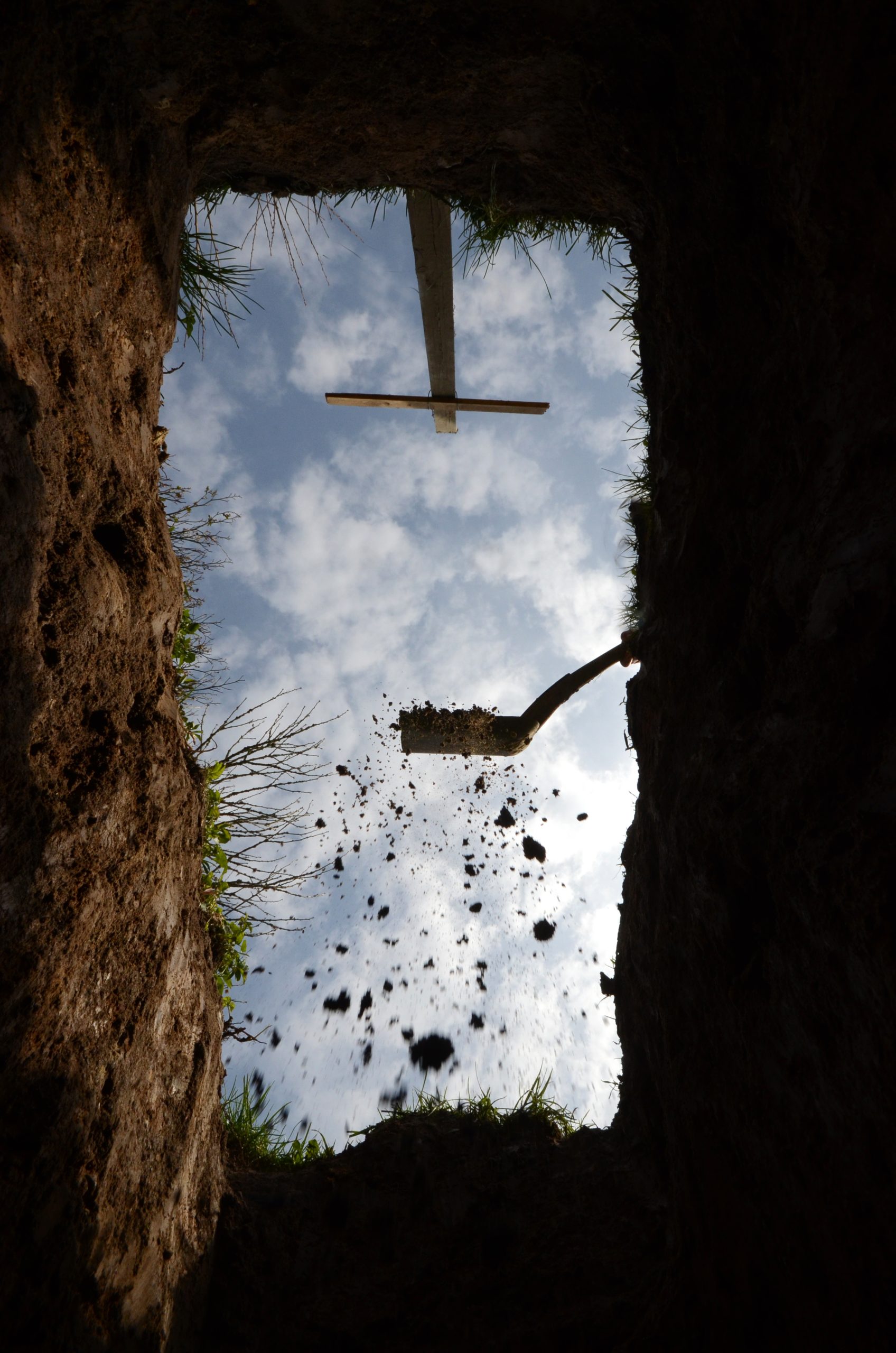
The legacy media has its leg in its own snare trap. It must face the pain of biting its own leg off, owning its failures and regaining the trust of America as a nonpartisan, objective institution interested in investigating everyone in its role of the Fourth Estate. Or it will slowly wither away, letting journalism take form in a new medium.
I will cut the legacy media a slight break due to the gripping addiction social media has on the public, along with the ever-dwindling American attention span always yearning to consume the next thing. But I refuse to chalk up its demise and redirect the case to societal changes only.
Journalism will never die, so long as we keep the internet free and open. But again, that is a story for another time.