
University leaders cited faculty-driven ideas, industry partnerships and smarter use of space as construction management, electrical engineering and nursing are reshaping the future of SRU.
Slippery Rock University is in the middle of one of the most extensive academic overhauls in its modern history. Over the next several years, the university will introduce new academic programs, renovate or repurpose multiple buildings and pour millions of dollars into STEM and healthcare facilities. These changes are not abstract long-term ideas. They are already underway, already funded and already shaping the daily lives of students and faculty.
Provost Michael Zieg says the university is trying to move quickly and intentionally in response to shifting student needs, industry demands and the competitive landscape of higher education. The introductions of construction management, electrical and computer engineering, and the new nursing partnerships are only the beginning.
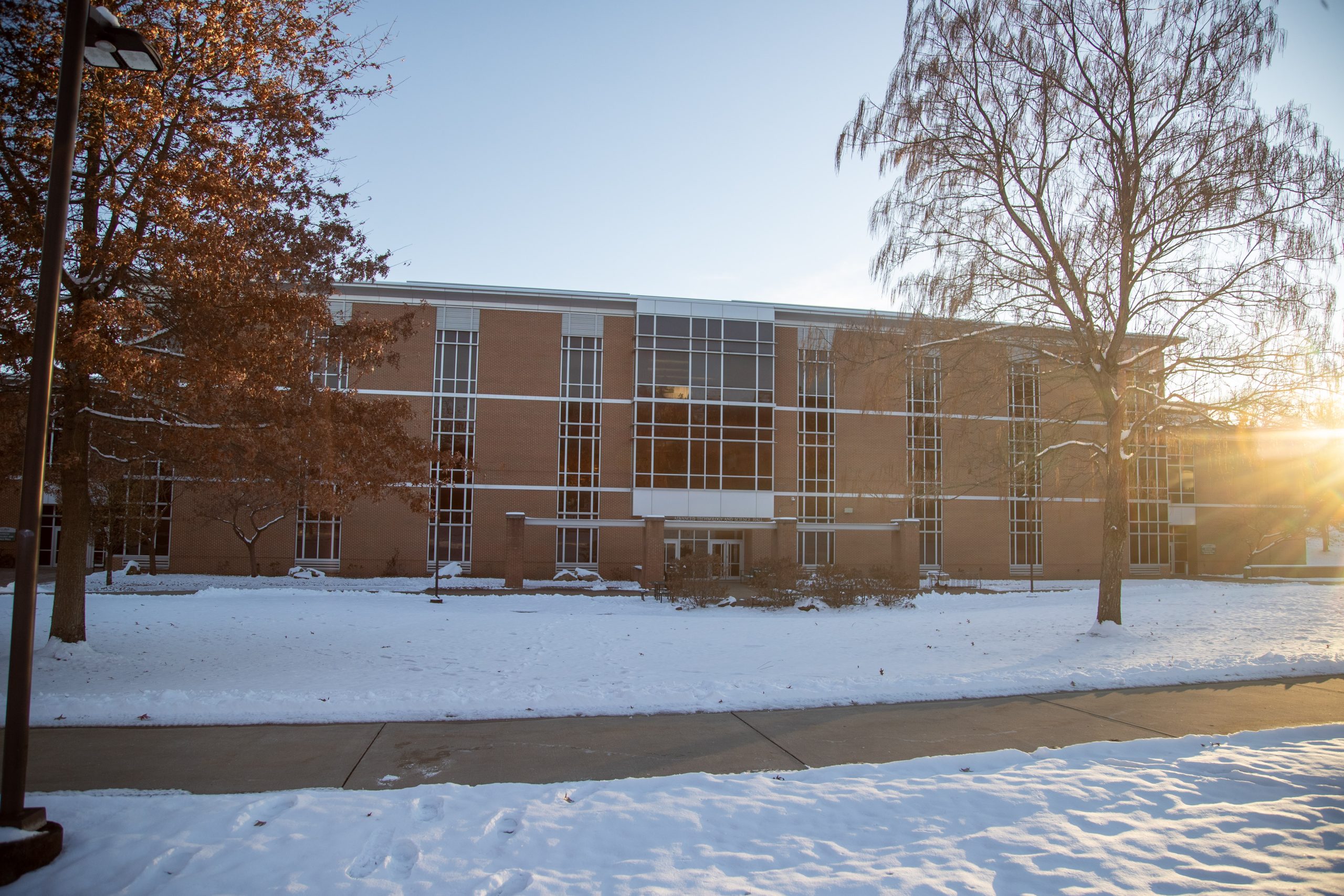
From new labs in Vincent Science Center to major moves across the sciences, and from creative academic partnerships to the complete re-imagining of the Advanced Technology and Science (ATS) Hall, SRU is preparing for a campus that looks and functions differently from the one students know today.
This is how those decisions were made and what the next few years will look like as the university works through one of the biggest programmatic transitions in decades.
Building New Programs: Where Construction Management, Electrical Engineering and Nursing Came From
When SRU announced the addition of its construction management, electrical engineering and nursing pathways, many students assumed the push came from enrollment pressures or statewide initiatives. According to Provost Zieg, the decision actually started with faculty identifying clear academic and job market needs.
“The engineering proposal came from our faculty,” Zieg said.
That internal momentum became the foundation for the university’s newest programs, as professors mapped out what they believed the next five to ten years of student interest and employability would look like.
Part of the urgency also came from what university administrators described as shifting demographics and a competitive higher education climate.
“We have Dr. Riley’s vision of growing through this upcoming demographic challenge,” Zieg said, referring to the strategic efforts to maintain enrollment despite national declines.
That urgency pushed the timeline forward: in Zieg’s words, “Let’s not wait, let’s get new engineering programs out now because every year we wait is a year we fall behind.”
Faculty recommendations aligned with that thinking. Their proposal was clear.
“Their recommendation was construction management and electrical and computer engineering,” Zieg said.
That combination ended up being the final package. They moved quickly.
“The faculty, workers and the dean, I have got to give them the credit. They worked really, really hard to turn this around really, really fast and get all the necessary approvals,” he said.
The programs are designed not only to address job shortfalls in engineering and construction fields but also to broaden SRU’s academic identity. These branches of engineering have been a missing pillar in the university’s catalog. By adding it strategically, faculty and administrators hope to attract students who may have otherwise overlooked SRU entirely.
And because of the competitive nature of nursing programs across the state, the partnership-based model with Allegheny Health Network and Community College of Beaver County (CCBC) allows SRU to participate in nursing education without having to build a full program from scratch immediately. Zieg describes the approach as flexible and responsive, a way to expand into high-demand fields without waiting years for facilities.
What Comes Next: Additional Academic Programs Already Being Considered
The recent program growth is not the end of the conversation. According to Zieg, several new academic additions are already in development and could be announced in the coming years.
“We have a couple of really cool ones in the works,” he said.
While the engineering additions came from faculty recommendations, some new programs are emerging through community and industry partnerships.
One of the most significant is another construction management pathway that would directly partner with the Carpenters Union in Pittsburgh.
“One of them is another construction management degree, which will be a partnership with the Eastern Atlantic States Carpenters’ Technical Centers in Pittsburgh,” Zieg said.
In this model, the union approached SRU and asked if the university could create a program that would help individuals who have already completed the carpenter’s apprentice program complete a bachelor’s degree.
“They approached us and asked if we could provide a program that would take someone who had completed the carpenter’s apprentice program and articulate that to a bachelor’s degree,” Zieg explained.
Another academic area moving through the approval process is based in the physical and health education department.
“The physical and health education department is in the middle of the approval process to have a graduate certificate concentration program in coaching and officiating,” Zieg said.
This addition aligns closely with SRU’s athletic identity and its already strong reputation in sport-related academic fields.
The final program, Zieg highlighted, is one that is already complete.
“The last one is actually done now. It is an aviation partnership with CCBC,” he said.
Campus officials expect the aviation connection to attract students interested in flight training pathways paired with bachelor’s degree options, a combination that other Pennsylvania universities have begun to offer as well.
All three of these programs signal a shift in how SRU is thinking about curriculum. The university is leaning into partnerships that bring industry training and academic credit together, creating what administrators describe as stackable, flexible educational pathways.
Inside Vincent Science Center: What the New Electrical Engineering Labs Will Look Like
The most tangible part of the engineering expansion is happening inside Vincent Science Center.
“When we developed the Electrical and Computer Engineering program, we knew that we would need to develop new labs to be able to teach the specialized content for this new discipline. Two labs in Vincent will be renovated to meet this need,” Zieg stated.
The renovated spaces will include simulation technology, hands-on instructional areas and specialized electrical equipment.
“There is a model simulator for a power grid,” Zieg said.
This simulator would allow students to experiment with systems that mirror real-world energy distribution.
The labs will also include updated workstations.
“There is also some equipment to design and build electrical circuits and circuit boards,” he said.
These new tools would allow students to construct, test and analyze circuits in a way that SRU’s current science labs cannot accommodate.
The goal is full immersion. The labs will give engineering majors access to hardware traditionally found only in larger engineering schools.
And because the engineering programs are designed with interdisciplinary collaboration in mind, there will be shared space for all engineering students to work together, using equipment that bridges all disciplines.
Why the ATS Hall Is Becoming a Clinical Health Facility
While engineering is reshaping Vincent Science Center, SRU’s healthcare fields are driving a transformation of ATS. The decision came down to practicality.
“Funding is a big part of it,” Zieg said. Constructing a new building would involve significantly higher costs and a much longer timeline.
The university also realized something else.
“Overall, we have more instructional space than, technically, we need,” he said.
That means there is already square footage on campus that is underused or inefficiently configured. Instead of expanding outward, SRU is choosing to reorganize internally.
“There is poorly utilized space that is scattered here and there,” Zieg said.
Bringing health programs together solves two problems at once: it addresses the lack of clinical teaching areas and reduces fragmentation across academic departments.
Right now, students in physician assistant (PA) and occupational therapy (OT) programs take classes in Harrisville, miles off campus. According to Zieg, that distance has created an academic separation.
“With PA and OT out in Harrisville, the faculty and students miss opportunities to interact. There is some separation,” he said. “Their preference would be that everybody comes onto this campus.”
The real turning point came from a suggestion that did not initially sound realistic. “Hey, I have got a crazy idea,” someone proposed during planning discussions. As Zieg recalled, “It really did sound crazy when she started, but by the time she got done, I thought, holy cow, she has got a great idea here.”
That idea was the large-scale conversion of ATS into a clinical education facility capable of hosting PA, OT, physical therapy (PT), nursing cohorts and other health programs under one roof, along with the eventual consolidation of engineering in the current PT building. The plan ties together academic efficiency, better student experience and a long-term vision for SRU.
Moving Entire Departments: How SRU Plans to Minimize Disruption
The biggest logistical challenge ahead involves relocating six major academic areas: chemistry, biology, psychology, PT, PA studies and OT.
These moves will unfold in phases as different buildings are renovated and repurposed, and the university knows the stakes are high.
“We are doing a lot of planning to try to minimize the disruption,” Zieg said. “But the reality is that science departments cannot simply relocate temporarily without careful sequencing.”
Chemistry labs are the most inflexible.
“We can’t not have chemistry labs. Ever,” Zieg said.
The meaning is simple. Chemistry courses require functioning labs every semester. No pause, no downtime.
That requirement creates a hard deadline.
“We need to have new chemistry labs ready by fall ’27 at the very latest,” he said.
To meet that deadline, the design process must begin immediately.
“We have to start designing it today. Not quite today, but in January,” Zieg said.
The multi-year shuffle will be one of the most complex construction coordination efforts the university has undertaken. Administrators hope to create temporary placements that protect lab access, maintain research activity and avoid delays in student graduation timelines.
STEM Fees and Years of Planning: How SRU Built the Funding Reserve
Behind all the construction is a funding source students sometimes misunderstand: the STEM-H fee. Many assumed the fee was a new creation meant to cover engineering program costs. Zieg explained that the fee has been operating for years and has always had two purposes.
“The fees were set up to do both of those,” he said, referring to the pair of goals: consumable resources and long-term capital investments.
“All along, we had been using the STEM-H fees for consumable enhancements,” Zieg said.
Those costs include reagents, specialized equipment components and instructional supplies used in labs. However, because the fee was structured to collect more than the consumable amount, it began to accumulate a reserve.
“The capital balance had been building up,” he said.
Recently, the university made a transition.
“We just moved that capital balance into a plant fund that it is available for construction,” Zieg explained.
That move legally positions the accumulated surplus for campus renovations and expansions.
Zieg states that the fee is working correctly.
“The fees are doing exactly what they were always meant to do,” he said.
For students who wonder why the university suddenly has enough funding to renovate labs or convert ATS, the answer is nearly a decade of careful financial planning combined with enrollment growth in STEM-H majors.
Reimagining Learning: How New Facilities Will Change the Academic Experience
As SRU pours resources into engineering, health sciences and STEM, the question becomes what students will actually gain from these upgrades. According to Zieg, the benefits extend far beyond nicer buildings.
“We are going to have state-of-the-art learning systems,” he said.
That includes simulation equipment, flexible lab spaces and classrooms designed to serve multiple disciplines at once rather than isolating majors into separate rooms.
The university is intentionally moving toward adaptability. “We are moving away from ‘this space is dedicated for only one specific purpose,’” Zieg said. “And what we are moving towards is having flexible space that can be used dynamically and collaboratively across disciplines.”
For the health sciences, this includes advanced training technology.
“We will have the mannequins that will allow very high-fidelity simulations of real life medical scenarios,” Zieg said.
Students in nursing, PA, PT and OT would be able to work together on simulated patient cases that mirror hospital settings in ways SRU cannot currently support.
Engineering will see similar gains.
“It will make it very easy for civil and mechanical to work together,” he said.
Shared labs, shared equipment and shared spaces in Vincent Science Center are expected to foster cross-disciplinary project work.
The philosophy is consistent across departments. “These facilities will really let us do that in a way that we cannot always do right now,” Zieg said.
For faculty, the new buildings represent a chance to rethink curriculum. For students, it means more hands-on learning, better preparation for internships and stronger alignment with industry expectations. And for the university, it signals a modern identity built around collaboration, technology and experiential education.
A Campus Prepared for the Future
Slippery Rock University is not simply adding programs or renovating buildings. It is restructuring the physical and academic landscape of the institution. The push toward engineering, construction fields and health sciences speaks to regional workforce needs. The upgrades to STEM and health facilities support modern learning. And the shift toward flexible, collaborative spaces reflects how higher education is evolving nationwide.
These changes represent a strategic attempt to build resilience in a challenging demographic environment. They also reflect a recognition that SRU must move swiftly to remain competitive with universities that have already invested heavily in engineering and health infrastructures.
As these projects unfold, students will see construction zones, department relocations and temporary adjustments. But underneath the disruption is a clear direction, one that faculty, administrators and industry partners believe will shape SRU’s academic future for decades to come.
If the planning continues on schedule, 2027’s chemistry students may be the first to experience the redesigned chemistry labs. Future engineering students will take classes in labs that did not exist just a few years ago. And health science majors will study, train and collaborate in a unified clinical education center born from a suggestion that first sounded impossible.
For now, the work is just beginning. But the vision is already coming into focus: an SRU that is more collaborative, more hands-on and more aligned with the needs of the world students are preparing to enter—not only university, but also the workforce.