

By Ryan Mills and Robert Watson
Watson’s Vault is a historical series featuring relics and memories from Slippery Rock University and Slippery Rock community’s past. Knowledge and items are pulled from Vice President Emeritus and lifetime community member Robert Watson’s “vault” as well as University Archives.
Quiet on the third floor!
Those are the rules Bailey Library has set to provide students with a quiet space for studying. However, these needs were not quite considered with the original design of Old Main in the late 1800s and early 1900s, home of the first campus library.
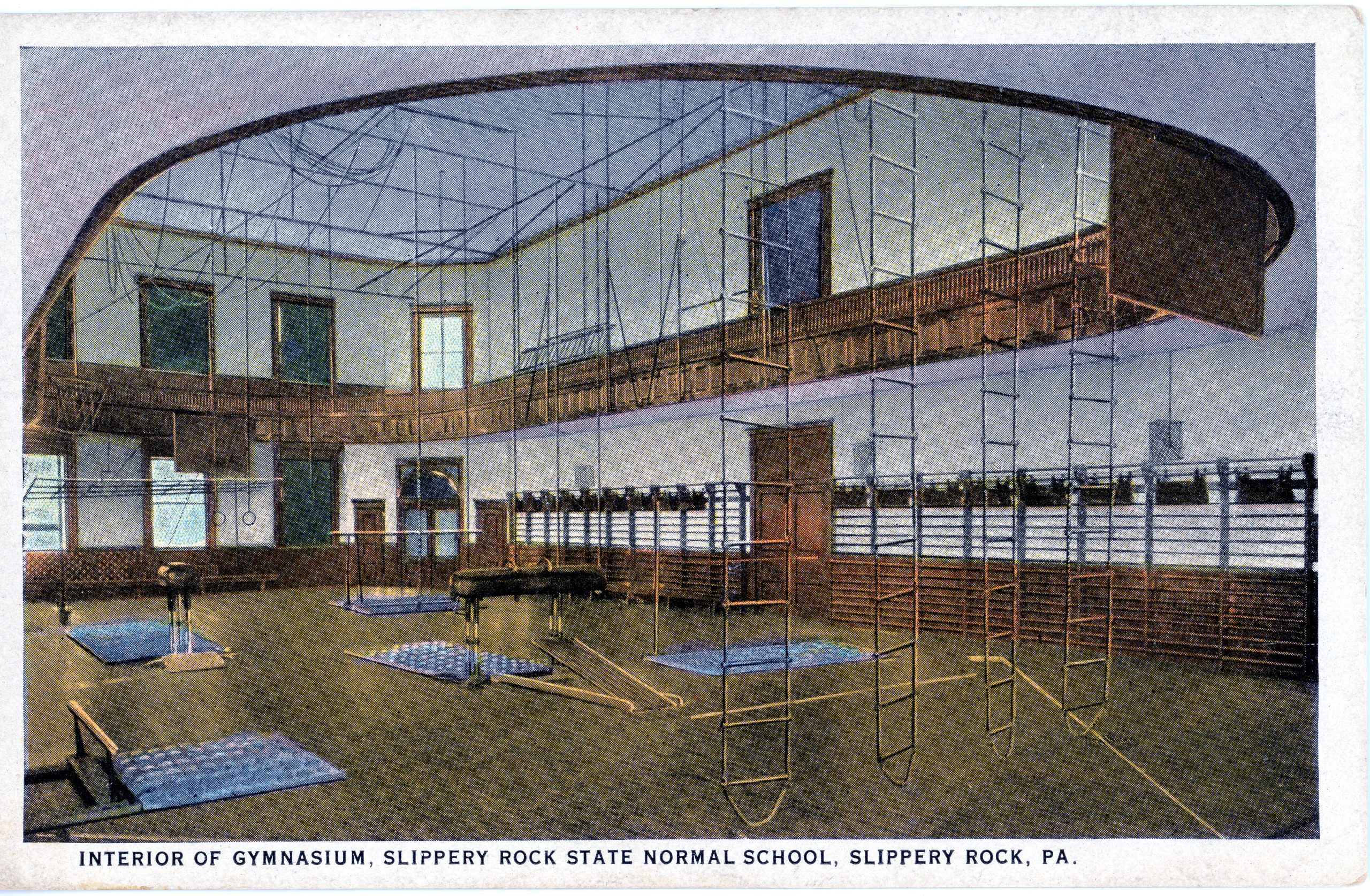
Not only was there talking on the third floor but there was an entire gymnasium situated directly above the library where students would go to study. After putting up with pounding basketballs above their heads for over 10 years, faculty and students decided enough was enough and that the gymnasium needed to be moved.
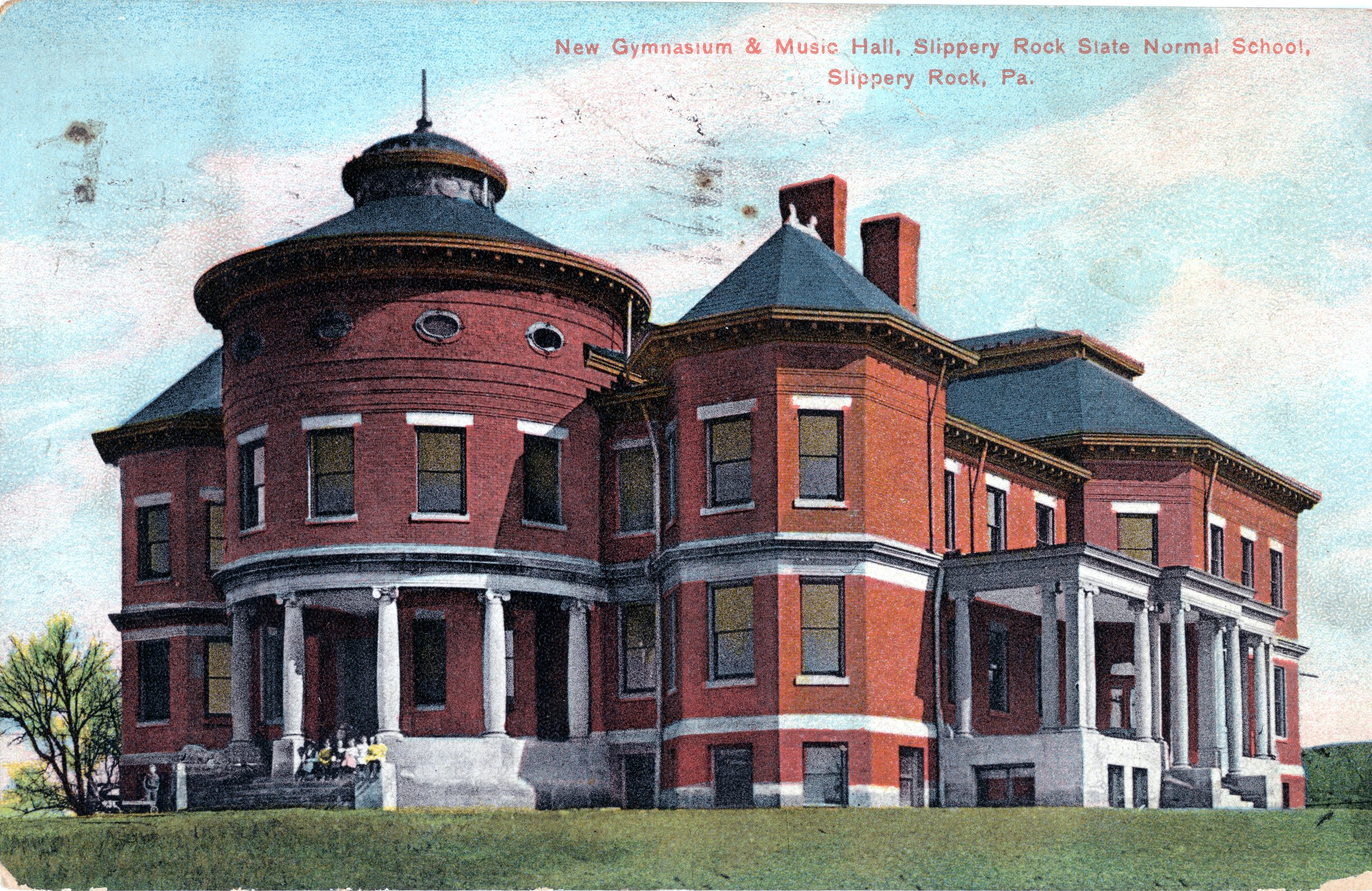
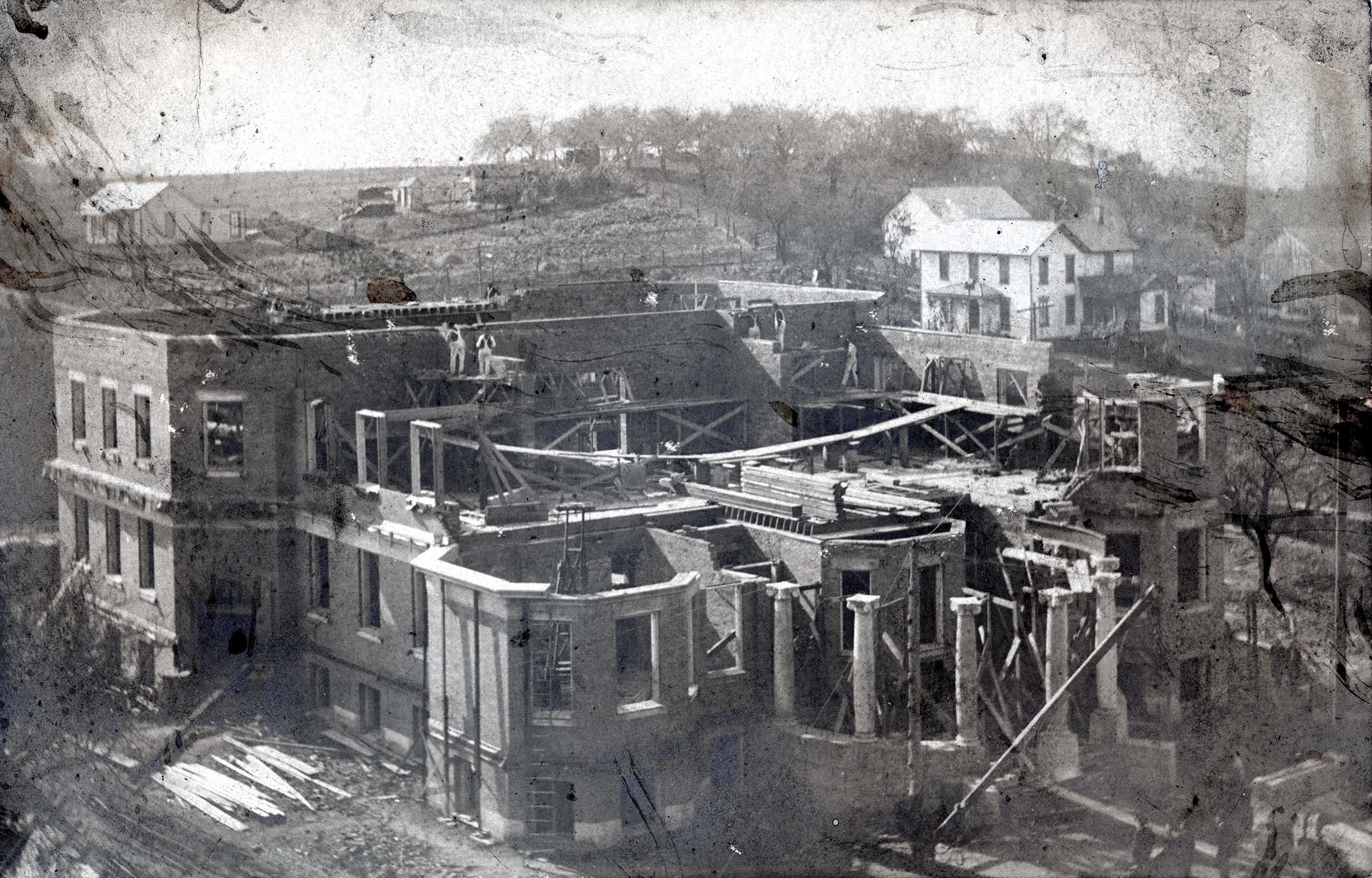
On July 3, 1905, a bid was awarded by the Board of Trustees, and they hired “the man,” Sidney Winfield Foulk, architect of the original nine buildings of Slippery Rock State Normal School, to begin construction on his last building for campus, West Gymnasium (known today as Stoner West). They paid him two and a half percent of the building cost plus an extra $10 for every trip to Slippery Rock to oversee construction.
The resulting $65,000 facility, better accounted for student needs and became the home for additional classrooms, a music hall for concert choir and orchestra, and a state-of-the-art gymnasium, complete with a basketball court, gymnastics equipment, and a second-floor banked indoor track. While the track has since been removed, the wood paneling that lined the perimeter of the track can still be seen along the walls inside the dance studio theater.
The layout was overall much improved from Old Main, with the gymnasium taking up the rear portion of the building on the first and second floor, and the classrooms (first floor) and the music hall (second floor) being placed at the front of the building away from the noise.
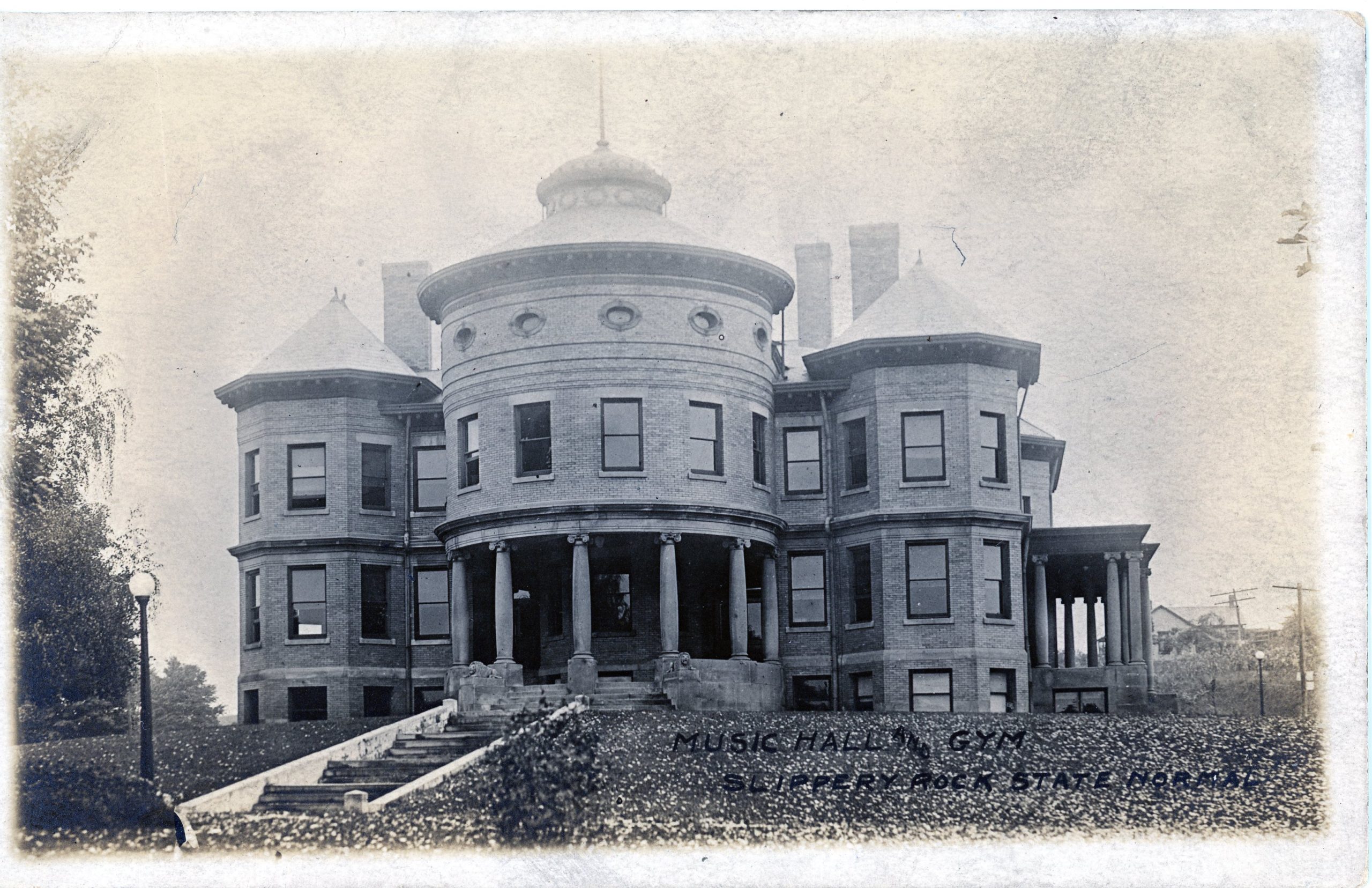
It was and still is a beautiful building designed by S.W. Foulk, both inside and out, decorated with a yellow brick exterior, a grand portico entrance supported by ionic columns, and a floor that used to be made of mosaic tiles spelling out “music hall”, which was located in the rotunda above.
Another feature of West Gym that was wiped away by future renovations was a set of magnificent limestone steps. They were once carved into the grassy hillside that can be seen in front of the building today. As the building was the location of the campus gym, the steps were a popular spot for athletic team photos. There was also a small back porch that has since been removed, but remnants of its existence can be seen in the brick walls on the corner of Kiester and Main Street.
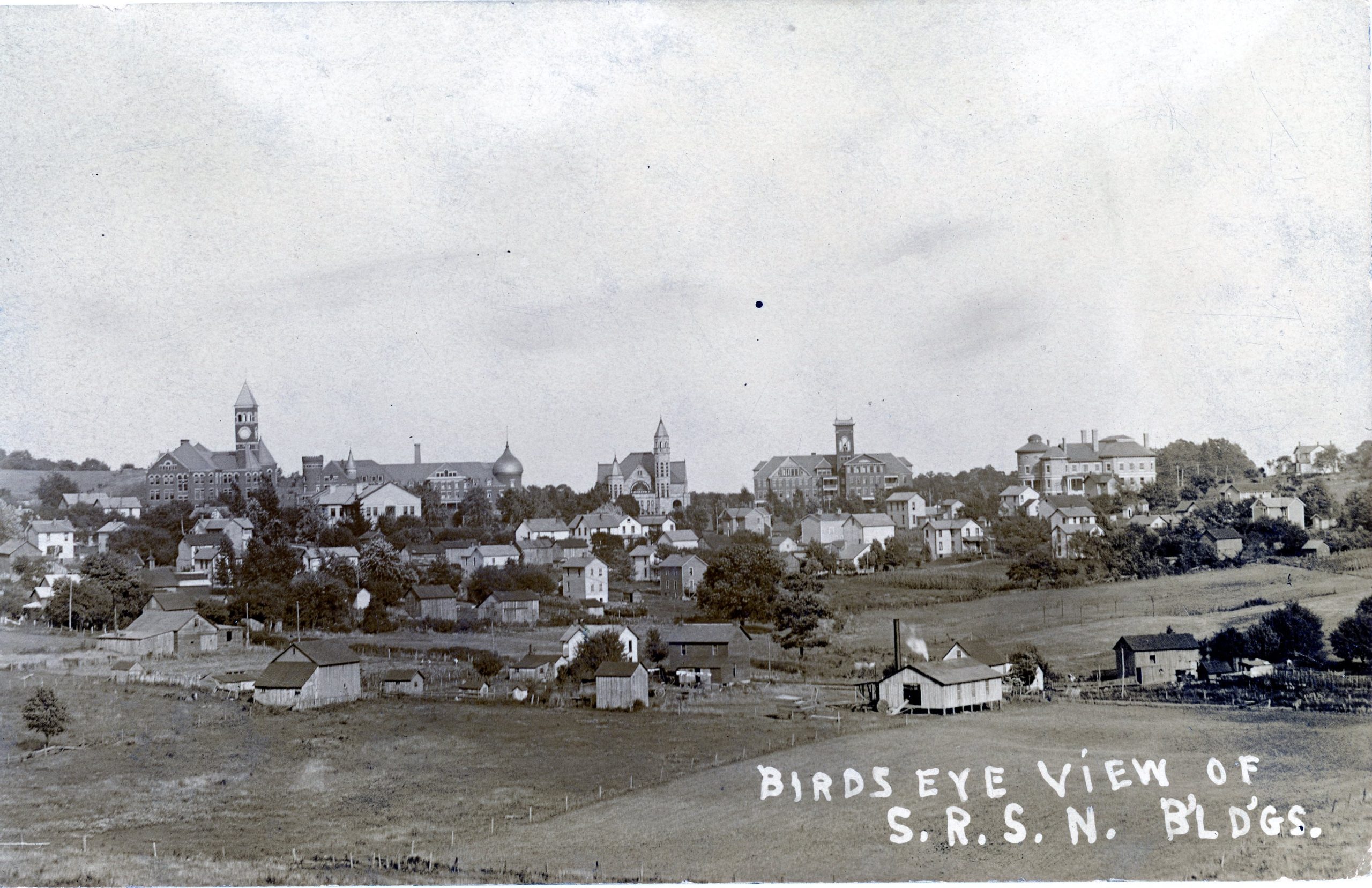
The location of West Gym was also deeply considered before construction and was significant at the time. Only five buildings made up the entirety of campus in the early 1900s: West Hall, Old Main, North Hall, the Chapel, and South Hall. They lined Main Street creating a concave panoramic view of the small campus as you passed by, and when West Gym was constructed, it was to be the capstone as to where campus ended.
It was decided in a special building committee meeting that the front of West Gym was to face the front entrance of Old Main (where campus started), to create a U-shape and to help unify the layout of campus.
A key player in the development of West Gym was John N. Watson, who served as chairperson of the building committee and oversaw most of the building’s construction. Watson, along with S.W. Foulk and other members of the committee, met frequently at the local drug store, Mr. Clutton’s, to discuss matters like excavating, stonework, building placement, and flooring.
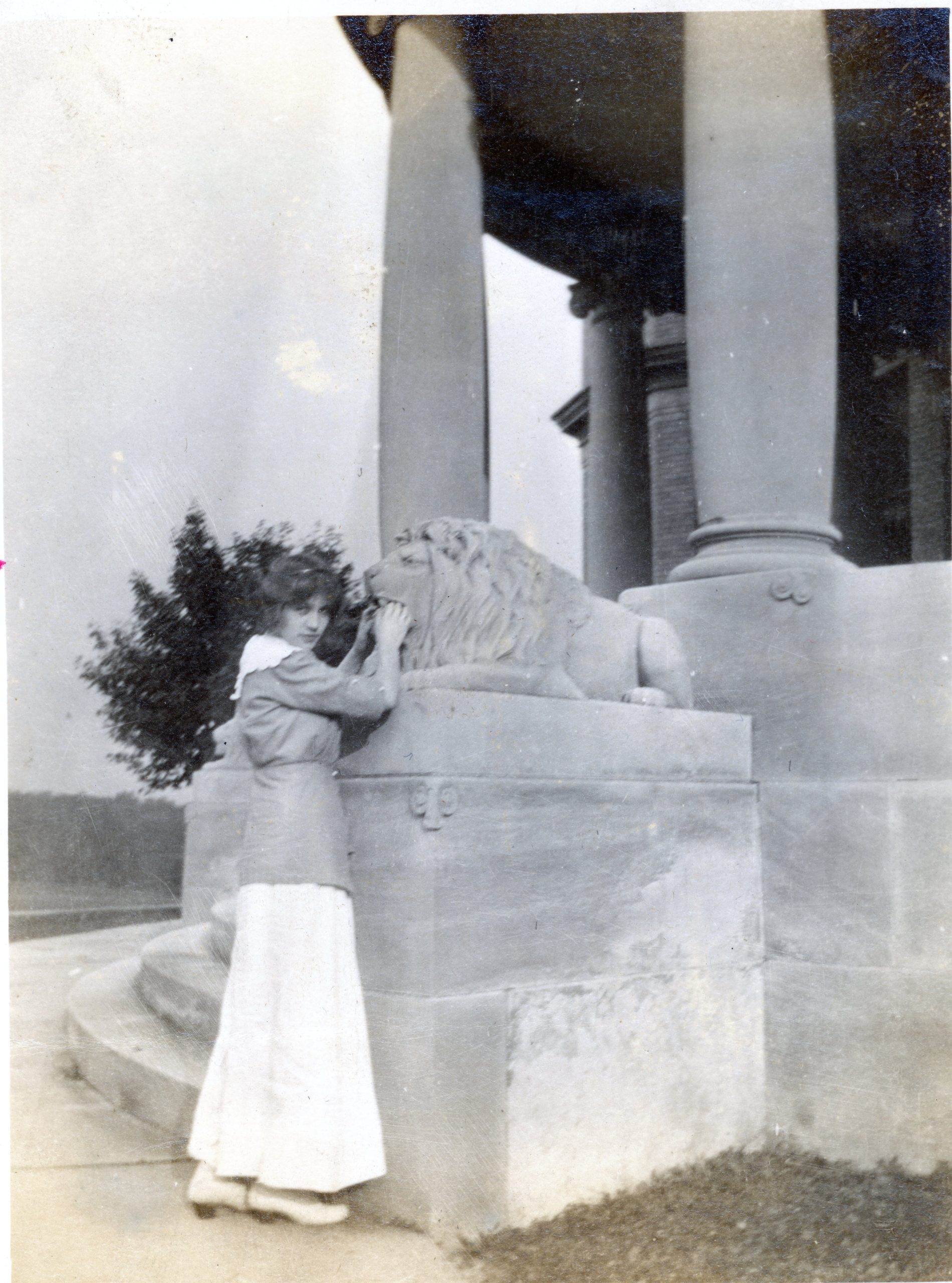
On April 3, 1908, after construction was delayed in its early stages due to weather, John Watson reported to the Board of Trustees that the “New Gym and Music Building” was now in use. Apart from S.W Foulk, Watson also has his own personal contribution to West Gym: stone lions that he sculpted himself that still flank the stone pillars at the main entrance today.
East Gym was added to campus in 1930 for additional gym space, and 60 years later the buildings were collectively renamed after Pearl K. Stoner and were transformed into the Performing Arts Complex.
Today, West Gym stands to be over 100 years old and is a testament to Slippery Rock University’s continuing effort to stay updated and supply students and staff with the facilities they need. To think that if S.W. Foulk and the designers of Old Main had just put the gymnasium on the first floor back in 1893, we might not have this piece of our history, West Gym.